Sayup Packaging | Custom Eco-Friendly Paper Packaging Manufacturer
Paper vs Plastic Packaging: Which Solution Is Better for Your Business?
Introduction
Packaging is more than just a way to protect products during transportation. For modern brands, packaging has become an important part of customer experience, brand identity, and sustainability strategy.
For many years, plastic packaging was widely used because it was lightweight, durable, and cost-effective. However, growing environmental concerns and changing consumer expectations have encouraged businesses to explore more sustainable alternatives.
Paper packaging has become one of the most popular choices for brands looking to reduce plastic usage while creating a premium and natural product experience.
So, when choosing between paper packaging and plastic packaging, which option is better for your brand?
The answer depends on your product requirements, industry, budget, and brand goals. In this article, we will compare paper and plastic packaging from different perspectives to help you make the right choice.
1. Environmental Impact: Paper Packaging Has a Sustainability Advantage
Sustainability has become a key consideration for many businesses worldwide.
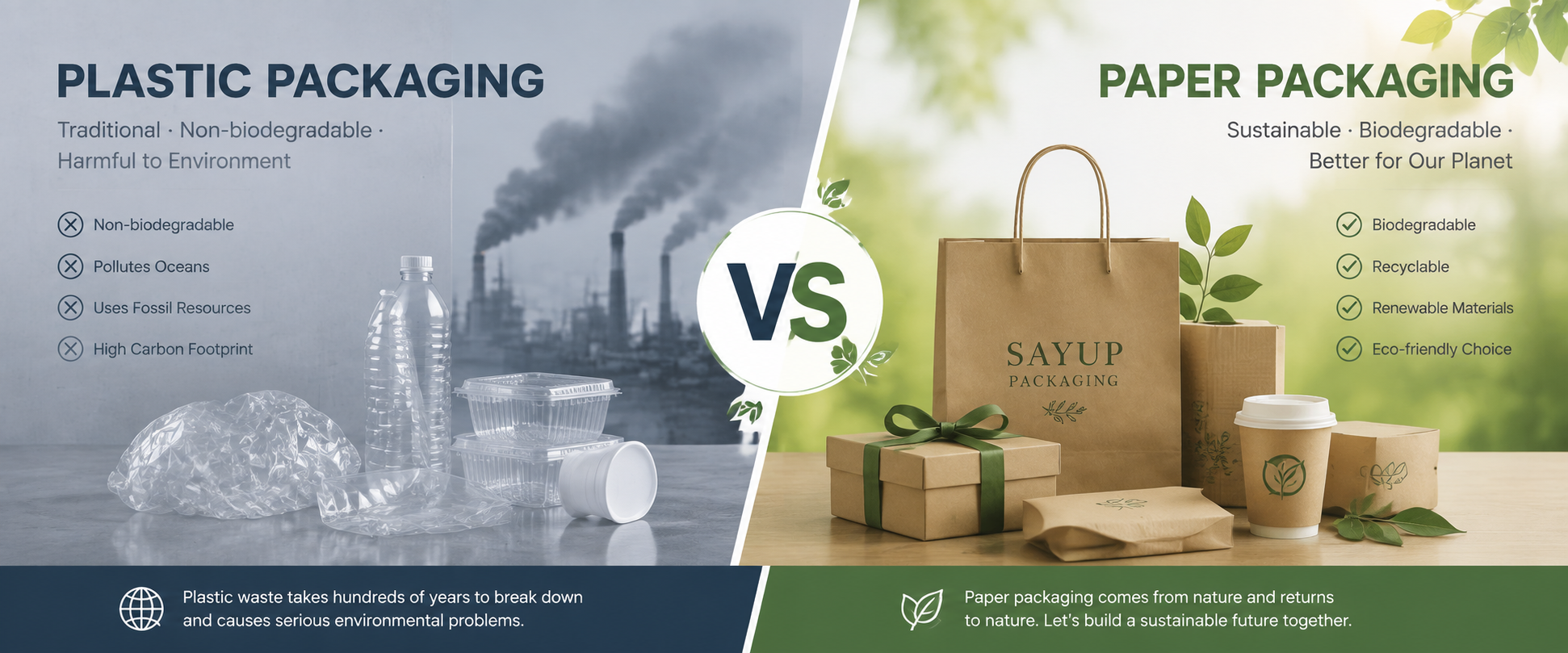
Plastic packaging is mainly produced from petroleum-based materials and can take hundreds of years to break down. Although some plastic materials can be recycled, recycling rates remain limited in many regions.
Paper packaging, on the other hand, is made from renewable resources and is generally easier to recycle. Materials such as kraft paper, cardboard, and specialty papers are widely used for eco-friendly packaging solutions.
For brands that want to communicate environmental responsibility, paper packaging can create a stronger connection with customers.
Common sustainable paper packaging options include:
- Kraft paper bags
- Paper gift boxes
- Recycled cardboard packaging
- Tissue paper packaging
- Paper wrapping materials
- Custom printed paper packaging
Choosing paper packaging helps brands reduce dependence on plastic materials and support a more sustainable packaging strategy.
2. Brand Image: Paper Packaging Creates a Premium Experience
Packaging is often the first physical interaction customers have with a brand.
A well-designed package can influence how customers perceive product quality.
Paper packaging provides a natural, elegant, and premium appearance that is especially suitable for industries such as:
- Fashion
- Cosmetics
- Jewelry
- Luxury goods
- Food and beverage
- Gift products
For example, a customized paper shopping bag with a brand logo, special printing, or premium finishing can make a simple purchase feel like a high-value experience.
Compared with ordinary plastic packaging, paper packaging offers more design possibilities, including:
- Custom colors
- Logo printing
- Embossing
- Hot stamping
- Matte or glossy finishing
- Special paper textures
These customization options help brands create packaging that matches their visual identity.
3. Durability and Protection: Plastic Still Has Certain Advantages
Although paper packaging offers many benefits, plastic packaging still has advantages in specific applications.
Plastic materials are known for:
- High water resistance
- Strong durability
- Lightweight structure
- Excellent sealing performance
For products that require strong moisture protection, such as certain food products, medical products, or industrial items, plastic packaging may still be a practical solution.
However, modern paper packaging technology has continued to improve.
Many paper packaging products can now include:
- Water-resistant coatings
- Food-grade inner layers
- Stronger paper structures
- Protective designs
This allows paper packaging to meet the needs of many retail and commercial applications.
4. Customer Preferences: Sustainable Packaging Builds Trust
Consumer purchasing decisions are changing.
Many customers today pay attention not only to product quality but also to the values behind the brand.
Eco-friendly packaging can help businesses:
- Improve brand reputation
- Attract environmentally conscious customers
- Create stronger customer relationships
- Differentiate from competitors
For example, a cosmetics brand using recyclable paper boxes and natural paper bags can communicate a message of quality, responsibility, and sustainability.
In competitive markets, packaging is no longer just a container. It is part of the brand story.
5. Cost Considerations: Finding the Right Balance
Cost is always an important factor when choosing packaging.
Plastic packaging is often cheaper for large-scale production because of its mature manufacturing process.
However, paper packaging can provide higher added value through:
- Better brand presentation
- Premium customer experience
- Stronger marketing appeal
- Sustainable positioning
For many retail brands, the additional value created by premium paper packaging can outweigh the initial cost difference.
Working with an experienced packaging manufacturer can also help control costs through:
- Flexible MOQ options
- Material recommendations
- Production optimization
- Custom packaging solutions
6. Which Industries Prefer Paper Packaging?
Paper packaging has become a popular choice across many industries.
Fashion & Apparel
Fashion brands often use:
- Custom paper shopping bags
- Clothing packaging bags
- Tissue paper
- Gift boxes
These solutions help create a premium shopping experience.
Cosmetics & Beauty
Beauty brands commonly choose:
- Cosmetic paper boxes
- Product gift boxes
- Paper bags
- Custom printed packaging
Elegant packaging helps communicate product quality.
Food & Beverage
Many food brands use:
- Kraft paper bags
- Bakery packaging
- Takeaway paper bags
- Sustainable food packaging
Paper packaging supports a natural and eco-friendly brand image.
E-commerce
Online sellers increasingly use:
- Custom mailer boxes
- Paper wrapping
- Branded packaging materials
Good packaging improves the unboxing experience and encourages customer sharing.
7. How to Choose the Right Packaging for Your Brand?
There is no single packaging solution that fits every business.
When choosing between paper and plastic packaging, consider:
Product Requirements
Does your product need moisture protection, extra strength, or special protection?
Brand Positioning
Do you want to create a premium, natural, or sustainable image?
Customer Expectations
What type of packaging experience does your target market prefer?
Long-Term Brand Strategy
Will sustainable packaging help your brand stand out in the market?
For many retail and consumer brands, paper packaging provides the right balance between functionality, design, and sustainability.
Conclusion
Paper packaging and plastic packaging both have their own advantages. Plastic remains useful for certain applications that require high durability and protection. However, for brands focusing on sustainability, customer experience, and premium presentation, paper packaging offers significant benefits.
Choosing the right packaging is not only about protecting products. It is about creating a stronger connection between your brand and your customers.
At Sayup Packaging, we provide customized eco-friendly paper packaging solutions for global brands, including paper bags, gift boxes, tissue paper, and sustainable packaging products.
With professional manufacturing experience, flexible customization options, and factory-direct support, we help brands create packaging that protects products while building a better future.
Ready to Create Sustainable Packaging for Your Brand?
Tell us your product type, packaging requirements, quantity, and design ideas.
Our team can help you develop the right packaging solution.